01
Pick a machine
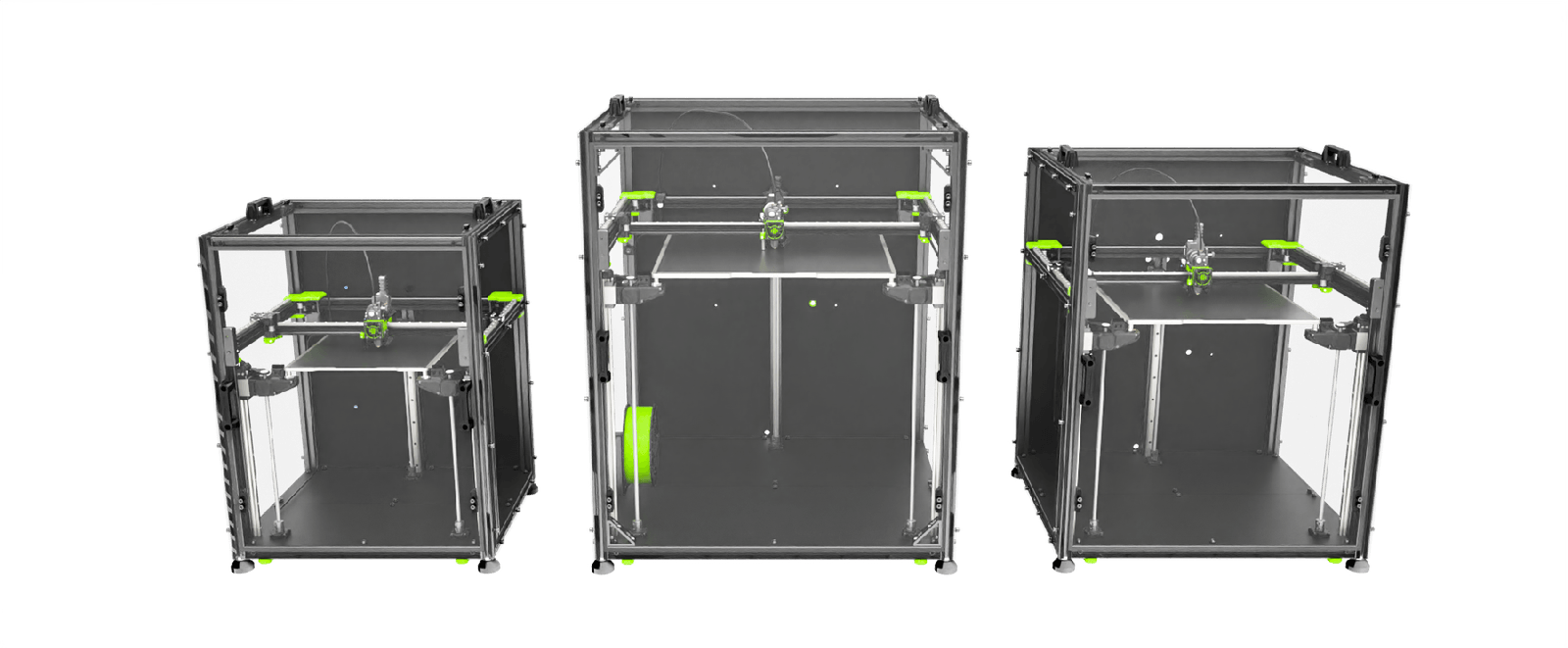
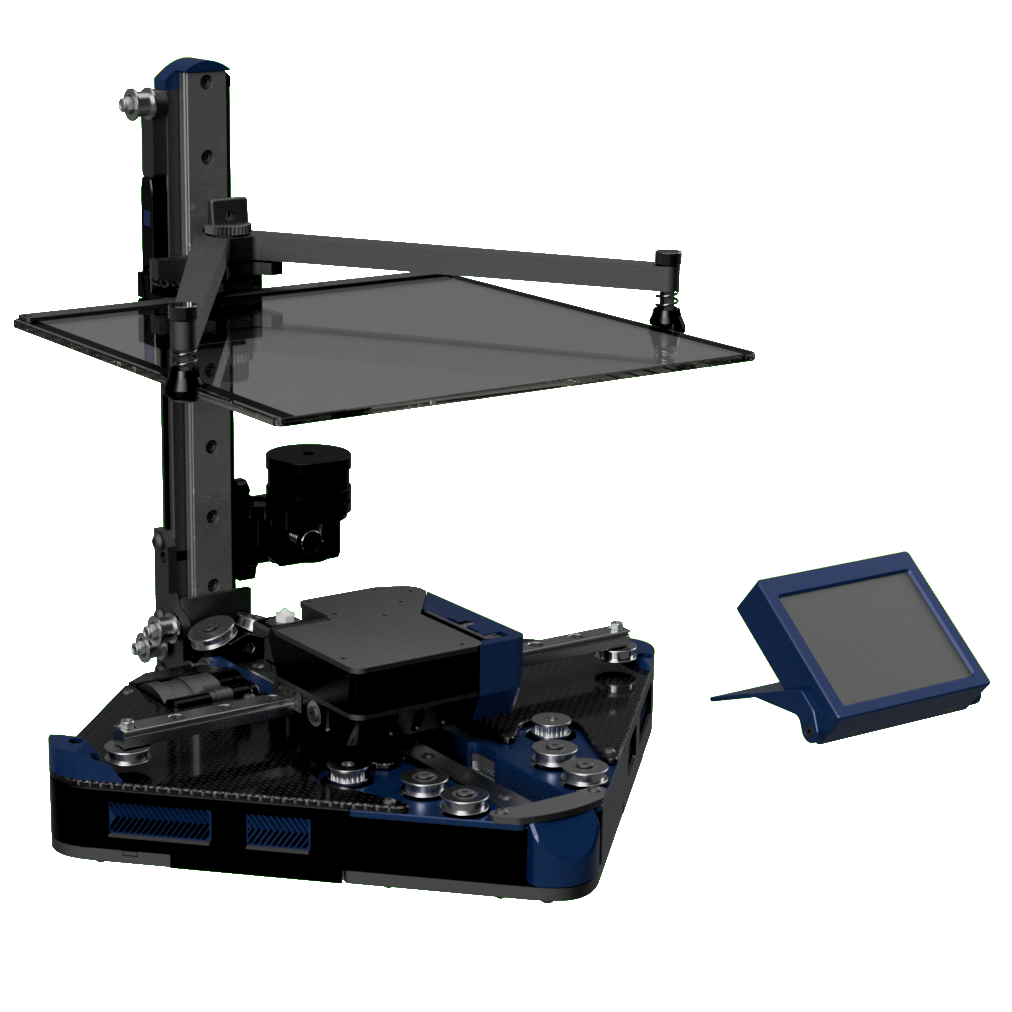
Choose a DIY printer or MMU, its size and a build tier.
Extrusion / Hotends
Complete guide to all hotends on the market — flow rates, max temps, and compatibility.
Bambu Lab · $20–30
The stock hotend that ships with Bambu Lab X1 and P1 series printers. Features quick-swap nozzle assemblies, stainless steel nozzle (hardened steel option), and integrated heater/thermistor. Surprisingly capable at stock settings for the price.
BigTreeTech (BTT) · $70–90
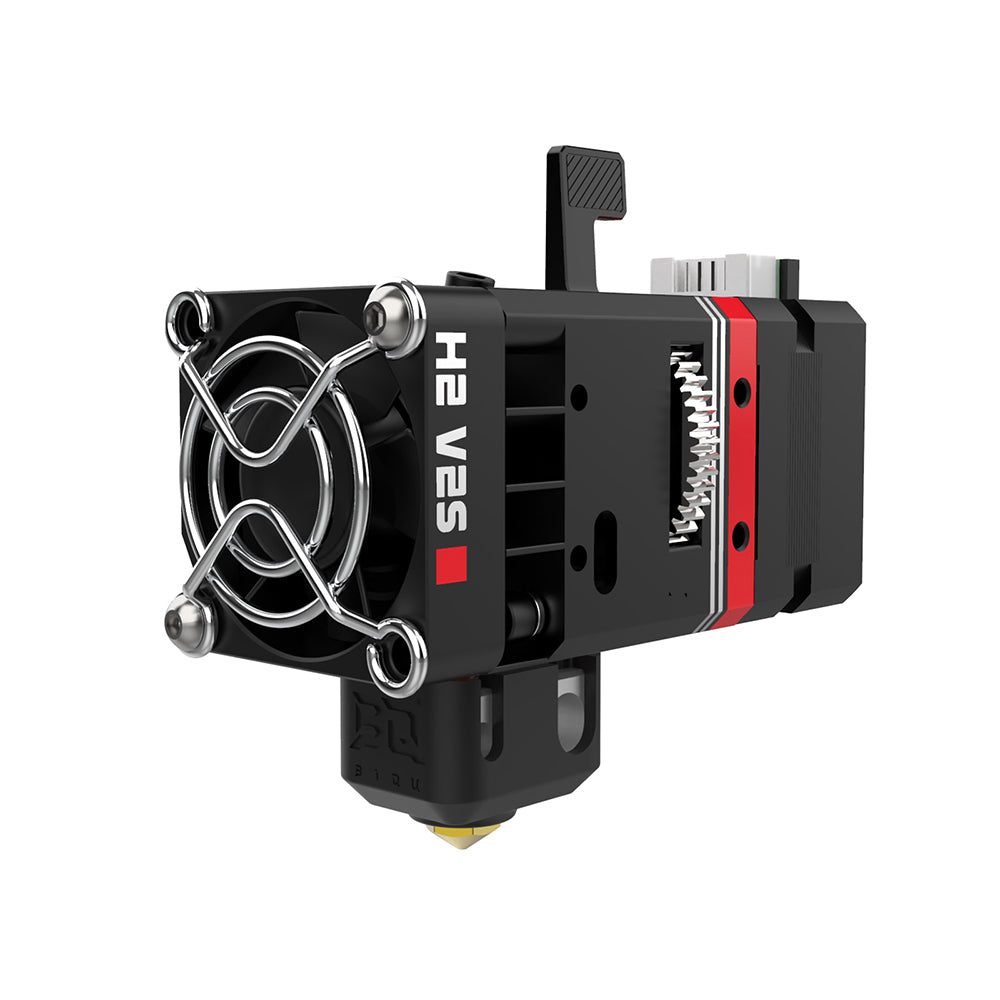
An ultra-compact integrated extruder and hotend unit from BigTreeTech. The H2 combines a dual-gear extruder with an all-metal hotend in one lightweight package. Popular for lightweight direct drive setups.
BigTreeTech (BTT) · $35–50
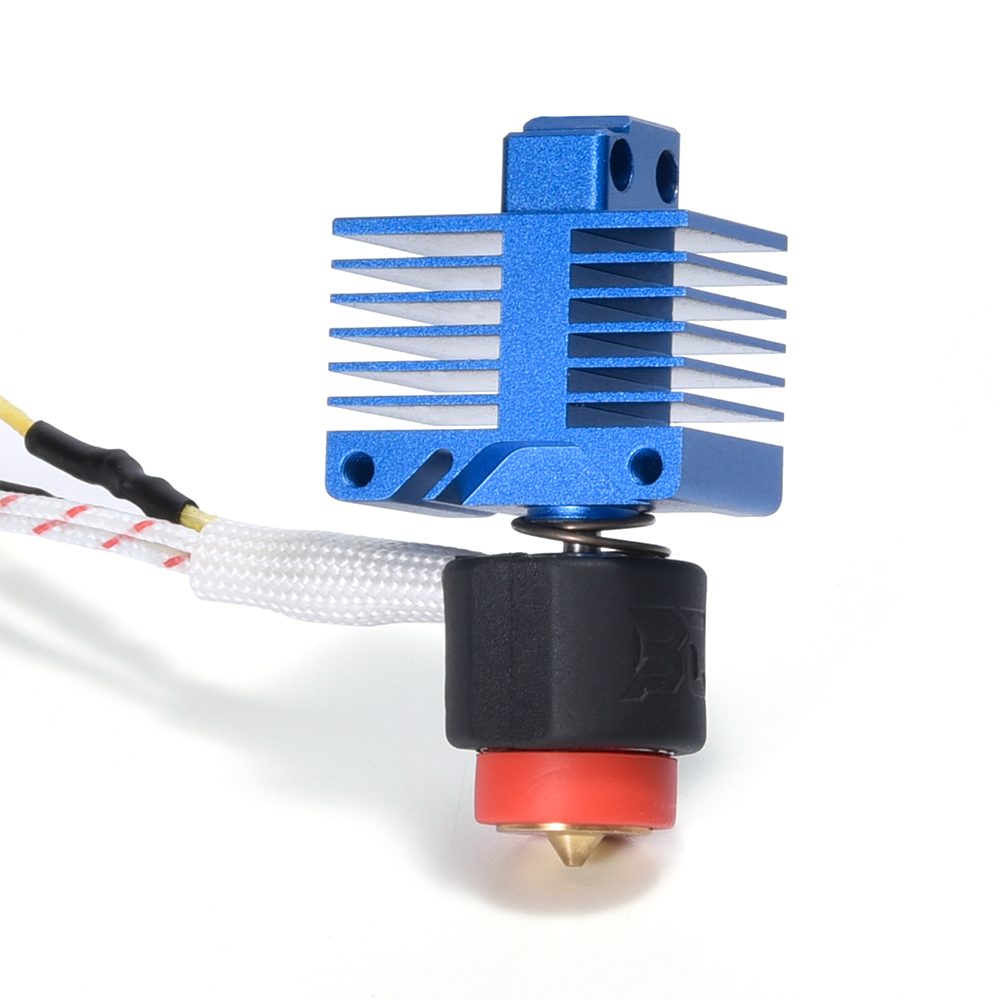
A Revo-compatible hotend designed as a drop-in upgrade for Bambu Lab printers. Brings E3D's tool-free nozzle swap system to the Bambu Lab ecosystem. Co-developed with E3D; ships with a 0.4mm Revo High Flow nozzle and a 60W HeaterCore, in X1 and P1 versions.
Creality · $30–50
Creality's all-metal high-temperature hotend. Supports printing up to 350°C with a bi-metal titanium alloy heat break. Compatible with V6 nozzles and available for a range of Creality printers.
DropEffect · $80–100
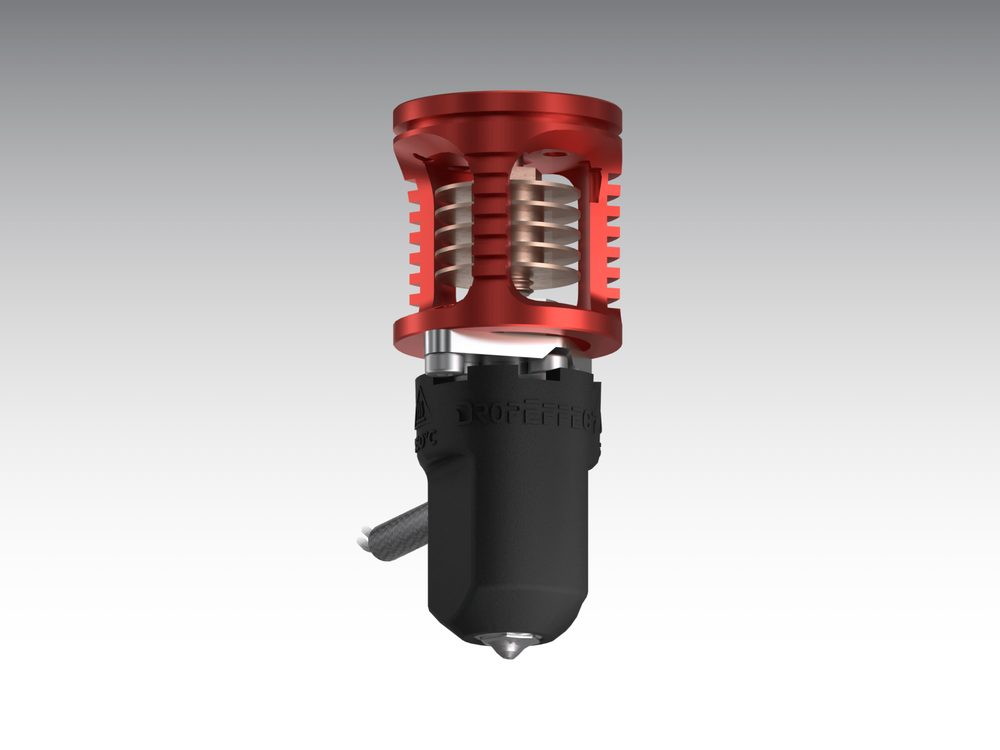
The successor to the XG with Dragon-compatible dimensions. Features the same kinematic coupling and extreme thermal gradient, but adds V6 nozzle compatibility and a UHF adapter option for up to 45 mm³/s flow. Also available in a Fiber variant with hardened components rated to 350°C.
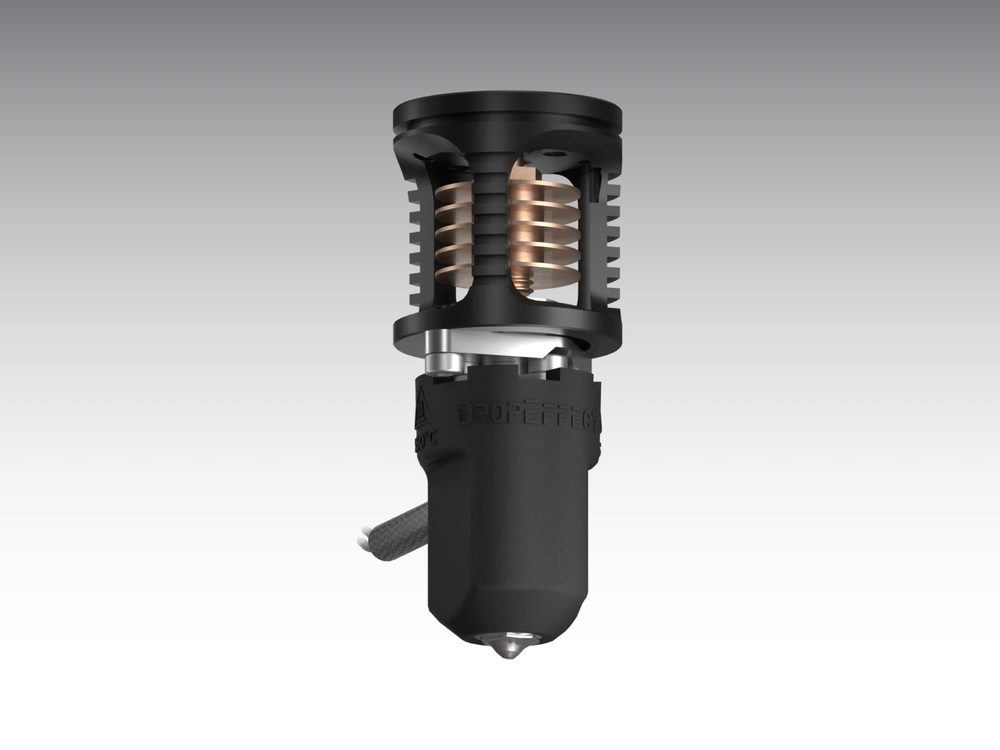
DropEffect · $90–110
The Fiber variant of the neXtG with hardened steel components specifically designed for abrasive filaments like carbon fiber and glass fiber composites. Same kinematic coupling and extreme thermal gradient heat break as the standard neXtG, but rated to 350°C with a PT1000 thermistor and hardened internals for wear resistance.
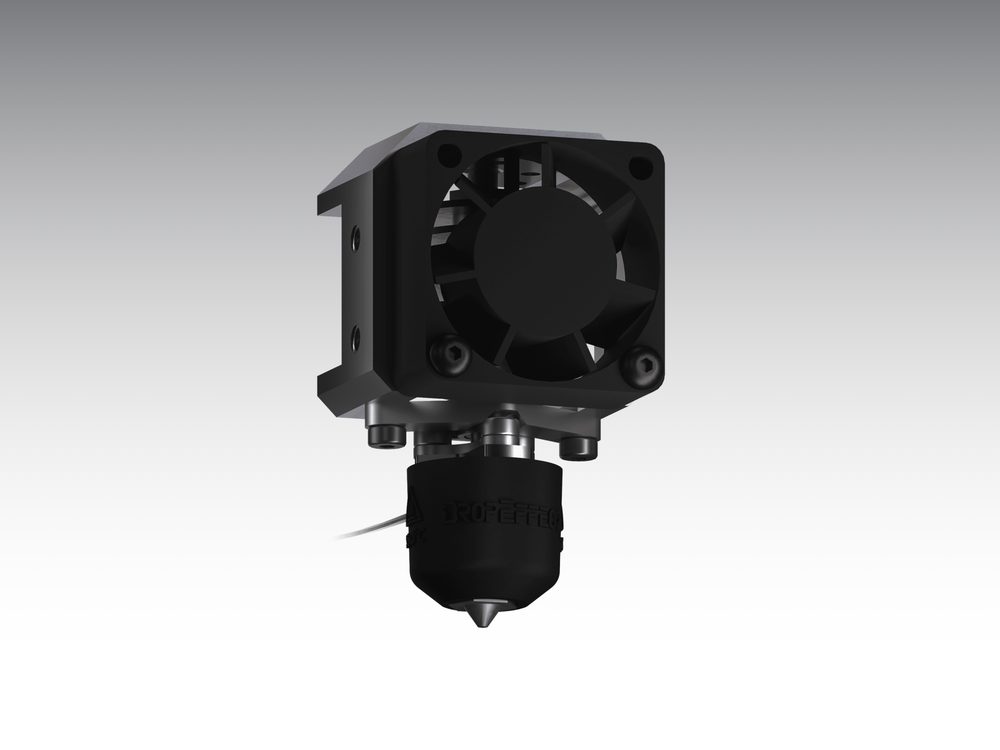
DropEffect · $70–90
One of the most advanced hotend designs on the market. Features kinematic coupling for one-handed nozzle changes, an extreme temperature gradient (XG) heat break for minimal clogging, and an ultra-lightweight 40g all-metal construction using titanium, copper, and aluminum.
E3D · $90–120
E3D's integrated direct-drive extruder and hotend system. Combines a 3:1 gear ratio extruder with a V6-class hotend in one package. Highly moddable — can be converted to Bowden. The Revo Hemera XS is the newer variant with Revo nozzle compatibility.
E3D · $30–40
E3D's budget-friendly entry-level hotend. PTFE-lined rather than all-metal, limiting it to ~245°C. Great for beginners printing PLA and PETG who want E3D quality without the all-metal price tag.
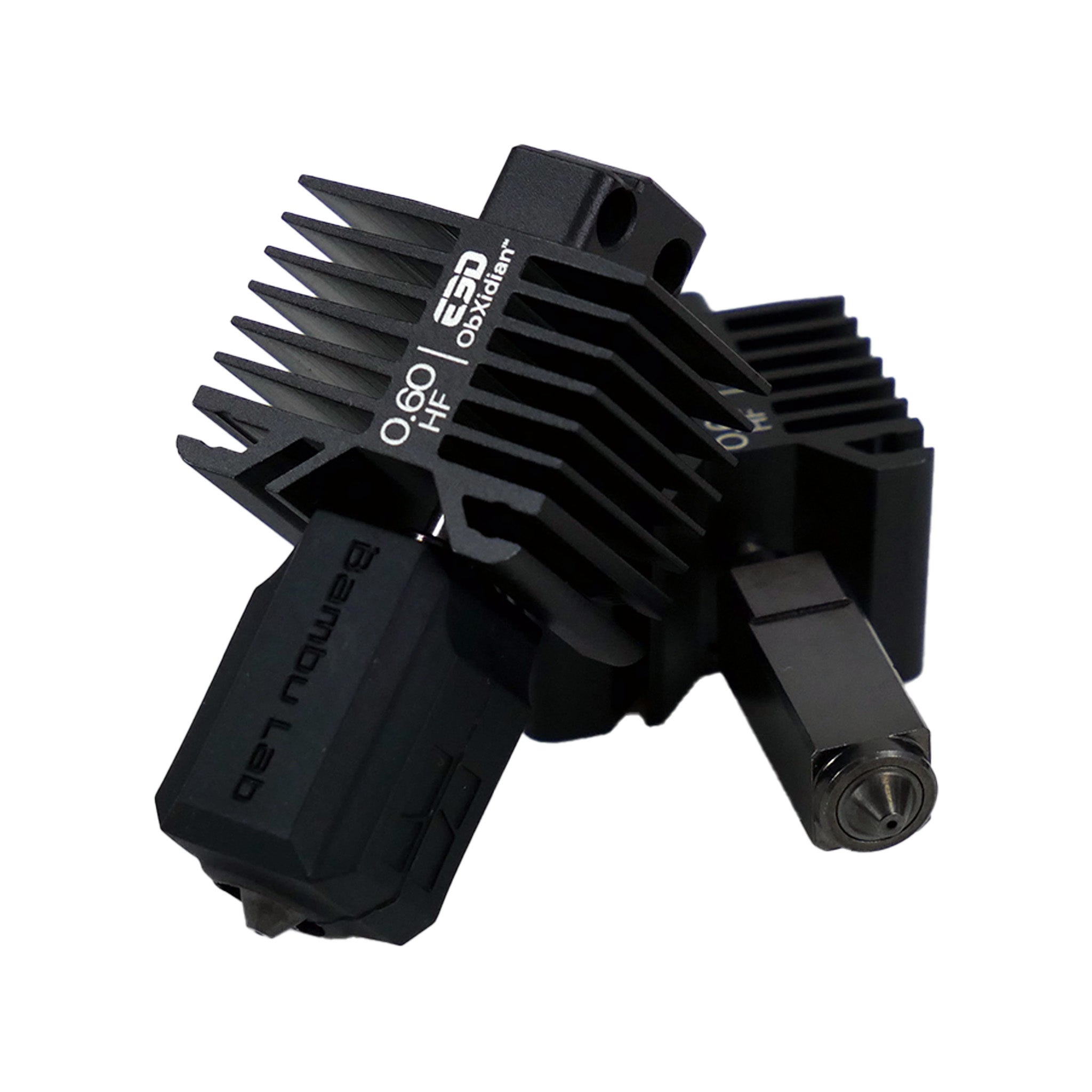
E3D · $80–100
An official E3D × Bambu Lab collaboration bringing high-flow performance and the E3DLC coating to Bambu Lab printers. The coating provides extreme abrasion resistance for fiber-filled filaments and a non-stick surface to prevent plastic buildup. Drop-in replacement.
E3D · $60–80
The smallest and lightest Revo hotend, designed for compact printers like the Voron V0. Only 17g, making it ideal for lightweight toolheads where every gram matters.
E3D · $70–90
The Revo ecosystem in a groove mount form factor, designed as a drop-in V6 replacement. Same tool-free nozzle changes and PTC heater safety as the Revo Voron but in a more universally compatible package.
E3D · $70–100
E3D's tool-free nozzle-swap system designed specifically for Voron printers. Incredibly lightweight at 25g. Nozzle changes at room temperature with bare fingers. PTC heater prevents thermal runaway. Available with standard and High Flow nozzles.
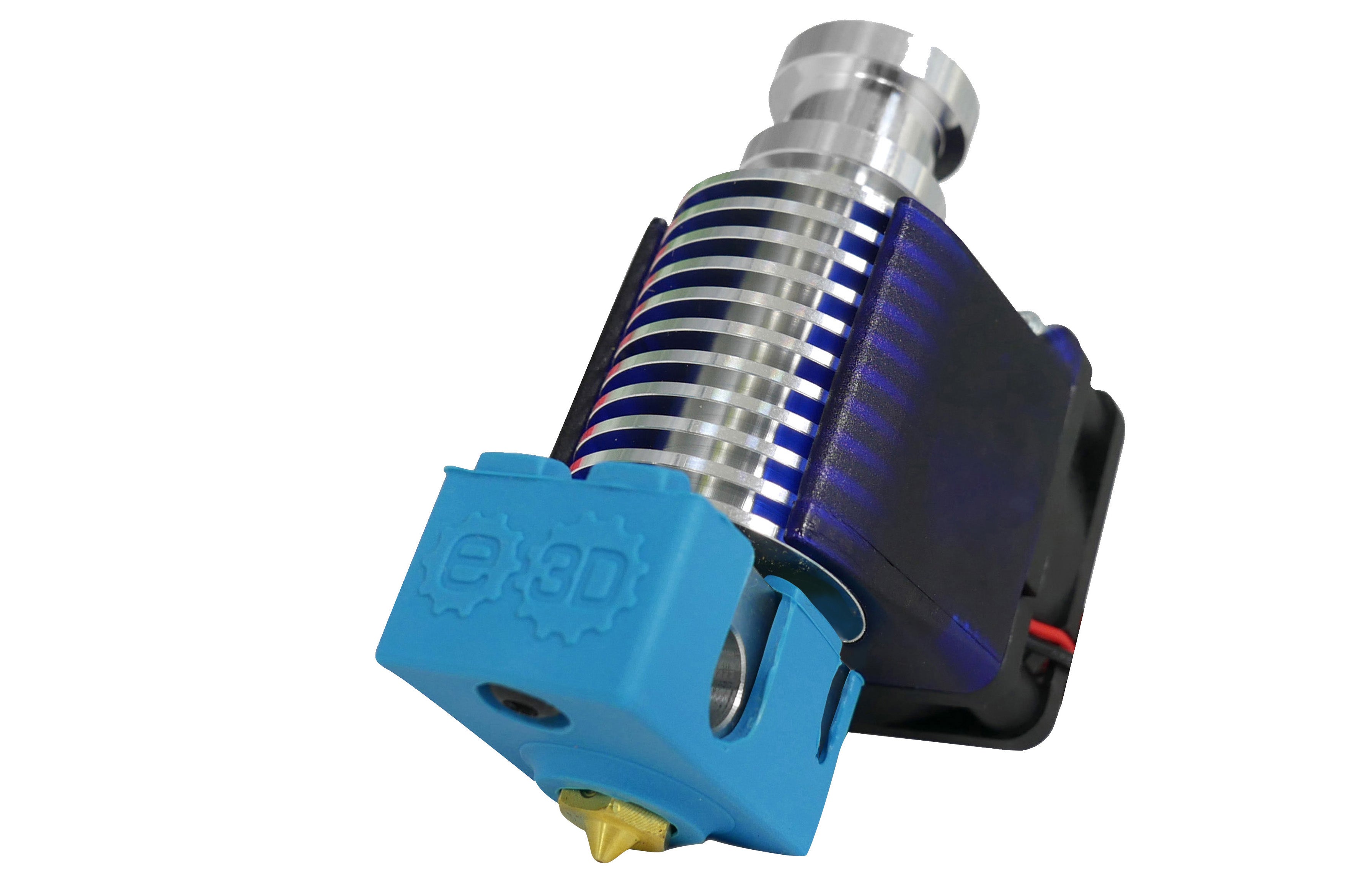
E3D · $50–70
The industry-standard all-metal hotend. Compatible with virtually every printer via community-designed mounts. Extremely well-documented, massive aftermarket nozzle selection. The benchmark all other hotends are measured against.
E3D · $60–80
Discontinued: E3D now redirects the Volcano HotEnd page to its discontinued-products page. It was E3D's high-flow variant of the V6 with an extended melt zone. The longer heater block gives filament more time to melt, enabling significantly higher flow rates. A classic choice for large-format and fast printing.
Fysetc · $8–15
Ultra-budget clone of the Bambu Lab stock hotend assembly. Available in brass, hardened steel, and copper alloy variants. Functional and surprisingly decent for the price, though quality control varies. Popular for having spares on hand.
Kingroon · $10–18
Another popular Bambu Lab hotend clone from Kingroon. Available for X1/P1 and A1 series. Comes in brass, hardened steel, and CHT high-flow variants. Widely regarded as one of the better Bambu clones for consistent quality.
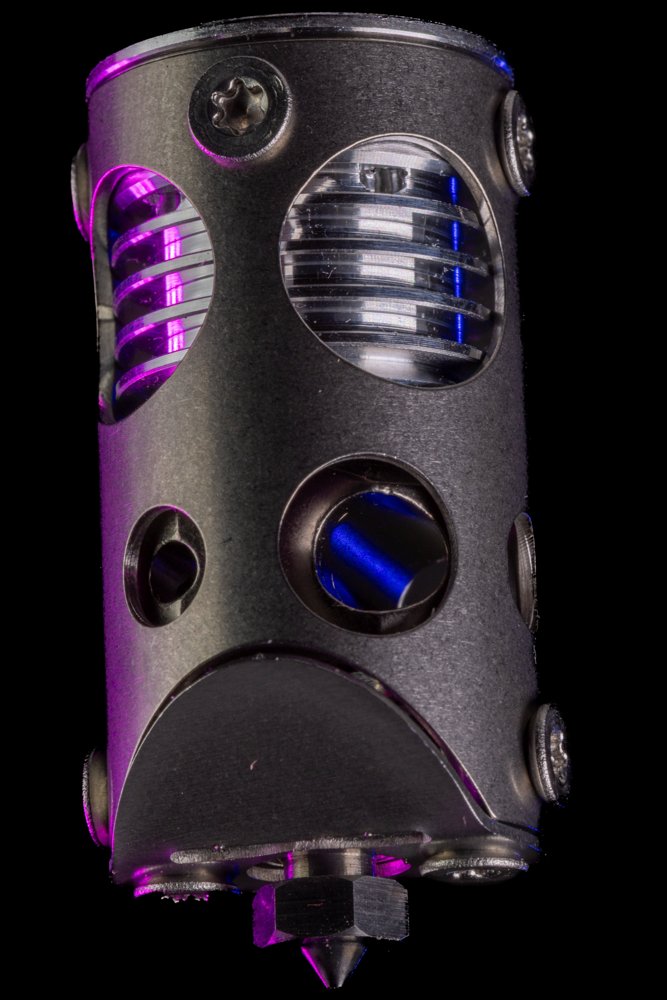
Luke's Laboratory · $170
A shorter, lighter Chube, built the same way: Chalice titanium heat break, M3 hardware, and a standard cartridge heater and thermistor. It has a 33mm melt zone before the nozzle, weighs 50g and is 47.2mm long with the nozzle fitted. It mounts on a 4×16mm M3 bolt circle, the Dragon pattern but with M3 screws. It ships with a 6×16mm 80W heater (6×15 and 6×20 also fit), a PT1000 thermistor, a stainless heat shield and a silicone sock. Made and assembled in Wrightstown, WI, USA, apart from the sock, heater and PT1000.
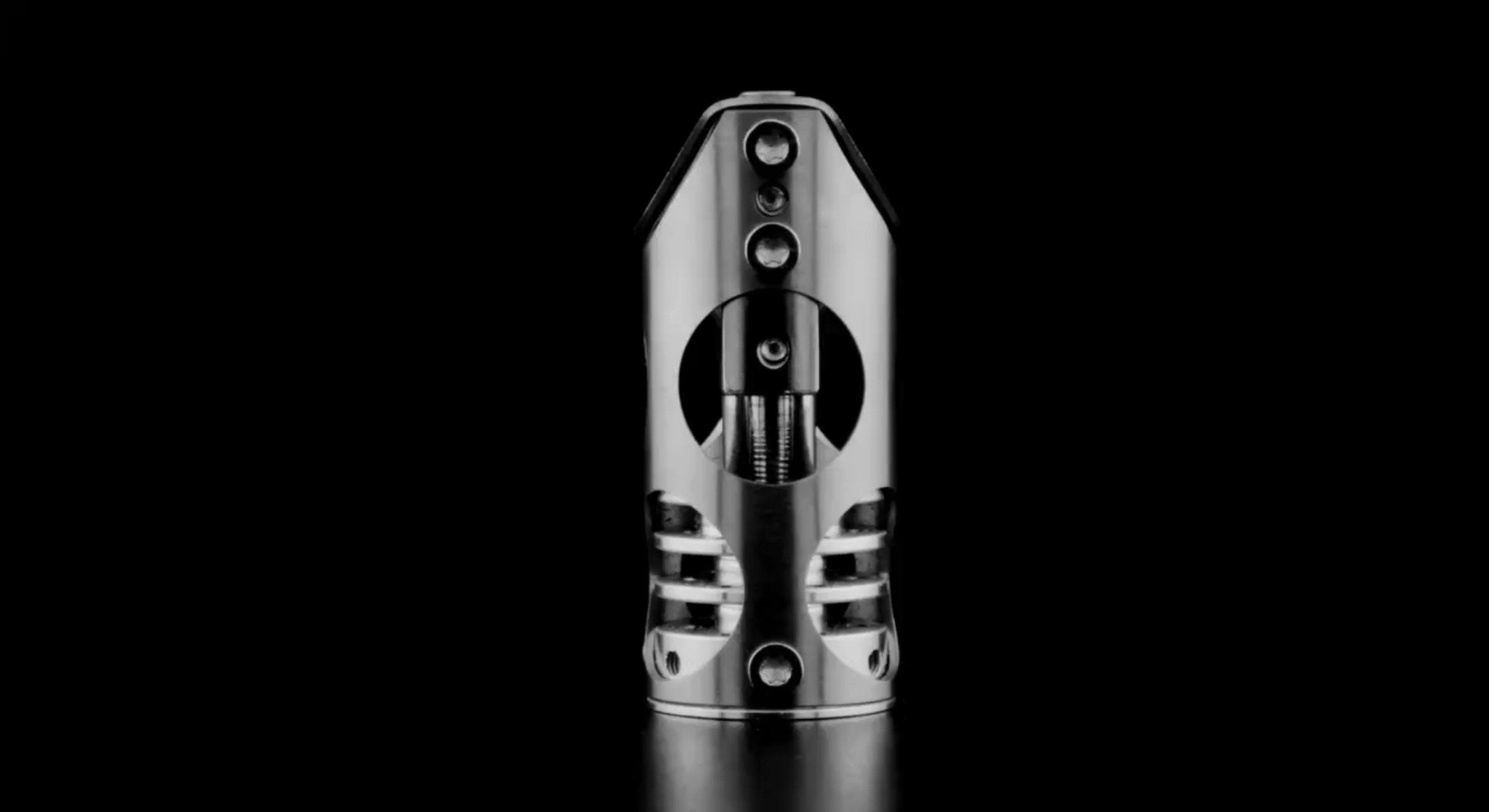
Luke's Laboratory · $260 (Air) / $320 (Conduction)
The full-size Chube: a high-flow hotend made in the USA with the patent-pending Chalice heat break (aerospace materials with a hardened, lubricious surface treatment). Comes in Air (42mm melt zone) and Conduction (52mm melt zone) versions, each with V6 or Volcano nozzle options. All M3 Torx hardware, and an integrated stainless steel part-cooling shield. For a shorter, lighter version, see the Chube Compact.
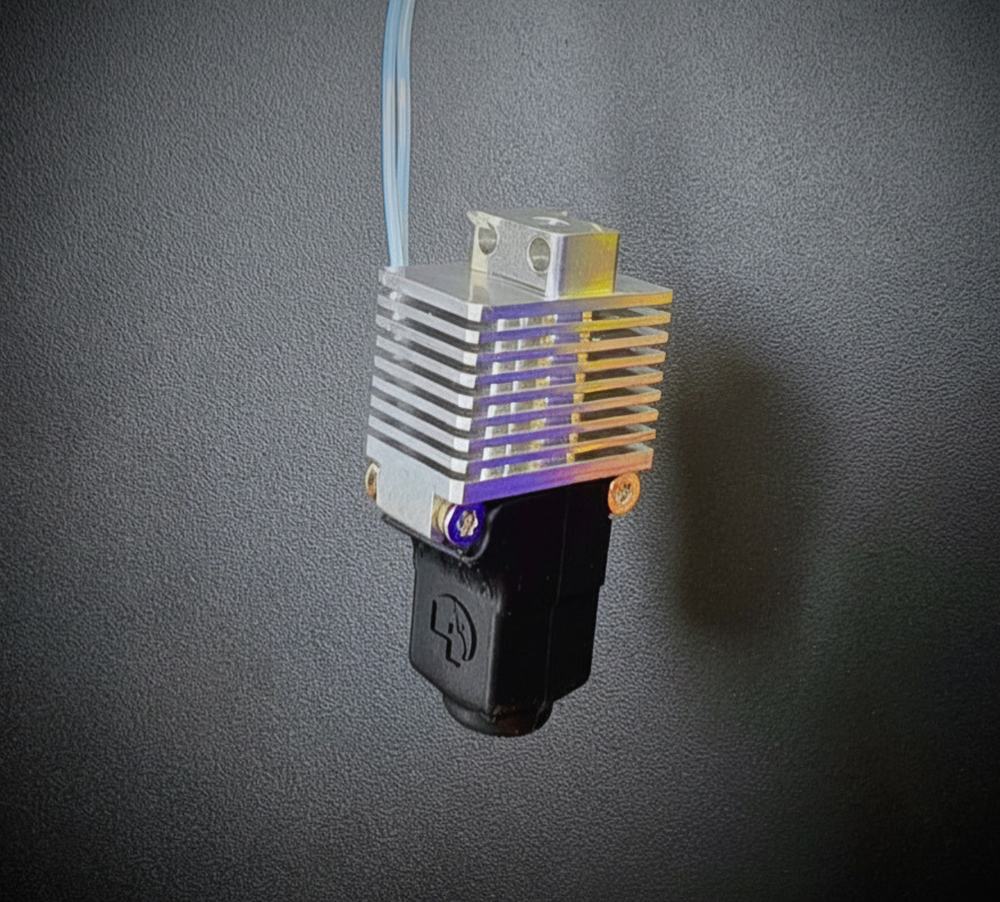
Luke's Laboratory · $110
A USA-made (Wrightstown, WI) drop-in high-flow hotend upgrade for the Qidi Plus4, released June 2026. Unibody titanium heatbreak with protective titanium wings for abrasive filaments, nickel-plated copper heat block, and a 33mm melt zone. Uses Luke's removable FIN nozzle system for quick on-printer size changes. Ships with an 88W Bambu-compatible heater because the stock Qidi heater is incompatible (some soldering/crimping required for install).
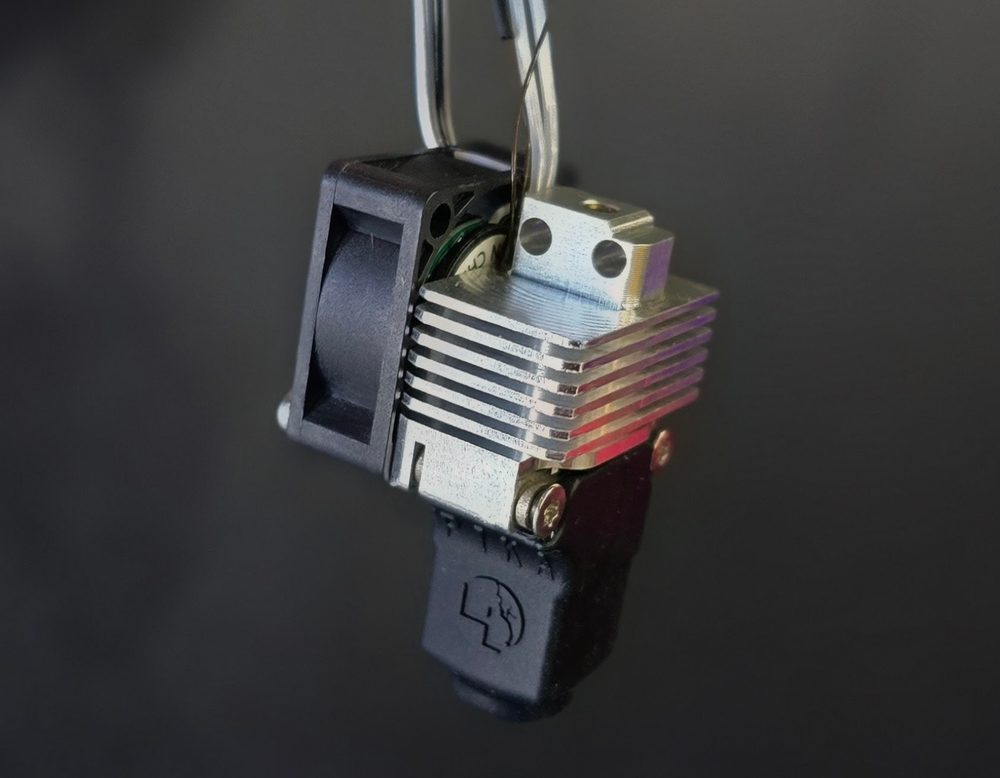
Luke's Laboratory · $125–165
A premium titanium-construction hotend from Luke's Laboratory designed as a drop-in Bambu Lab X1/P1 replacement. Features an extended melt zone for significantly higher flow, modular replaceable components, and FIN nozzle compatibility. Funded 286% on Kickstarter. Available with plated copper, hardened steel, or tungsten carbide nozzles. Made in USA.
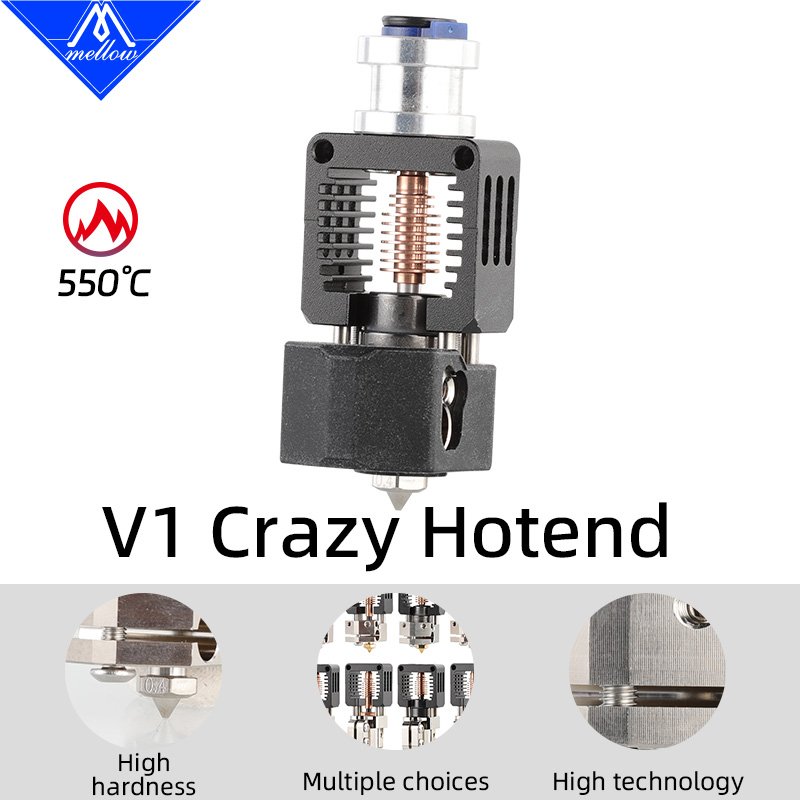
Mellow · $35–50
Mellow's Mosquito-style hotend clone with a compact cage design, nickel-plated copper heat block, and bi-metal heat break. One-handed nozzle changes via the cage structure. Replacement parts readily available. Much cheaper than the genuine Mosquito.
Mellow · $18–28
A compact bi-metal hotend that fuses the heat break directly into a smaller heatsink. Available in V6 and Volcano variants. The bi-metal construction allows excellent thermal performance with reduced noise (can use quieter fans). Plated copper heat block option available.
Mellow · $25–35
An innovative budget hotend featuring a ceramic heat break fused directly into the heatsink, eliminating thermal interfaces. Exceptional thermal separation — can even print PLA fanless in some conditions. Extremely lightweight at just 20g for the aluminum version.
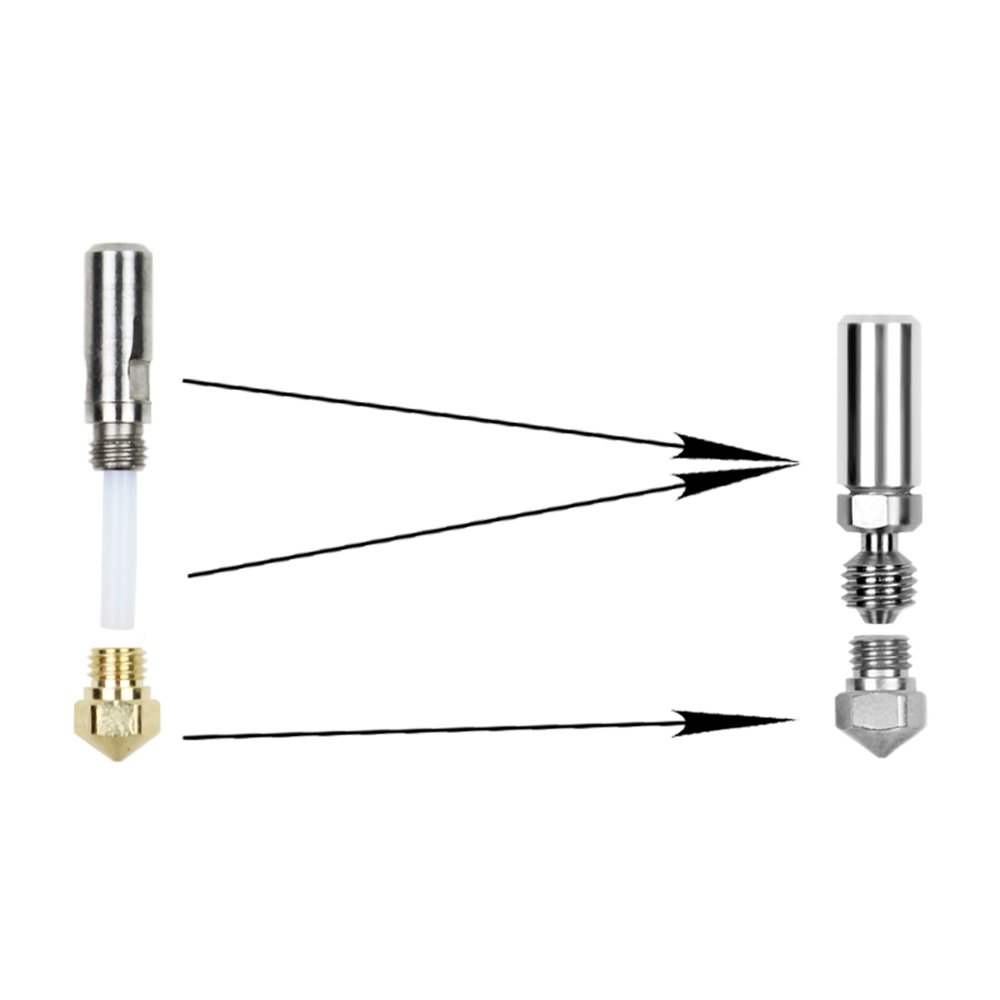
Micro Swiss · $40–55
A popular all-metal hotend upgrade for Creality printers. Replaces the stock PTFE-lined hotend to enable printing at higher temperatures with materials like ABS, PETG, and Nylon. Drop-in installation with no firmware changes needed.
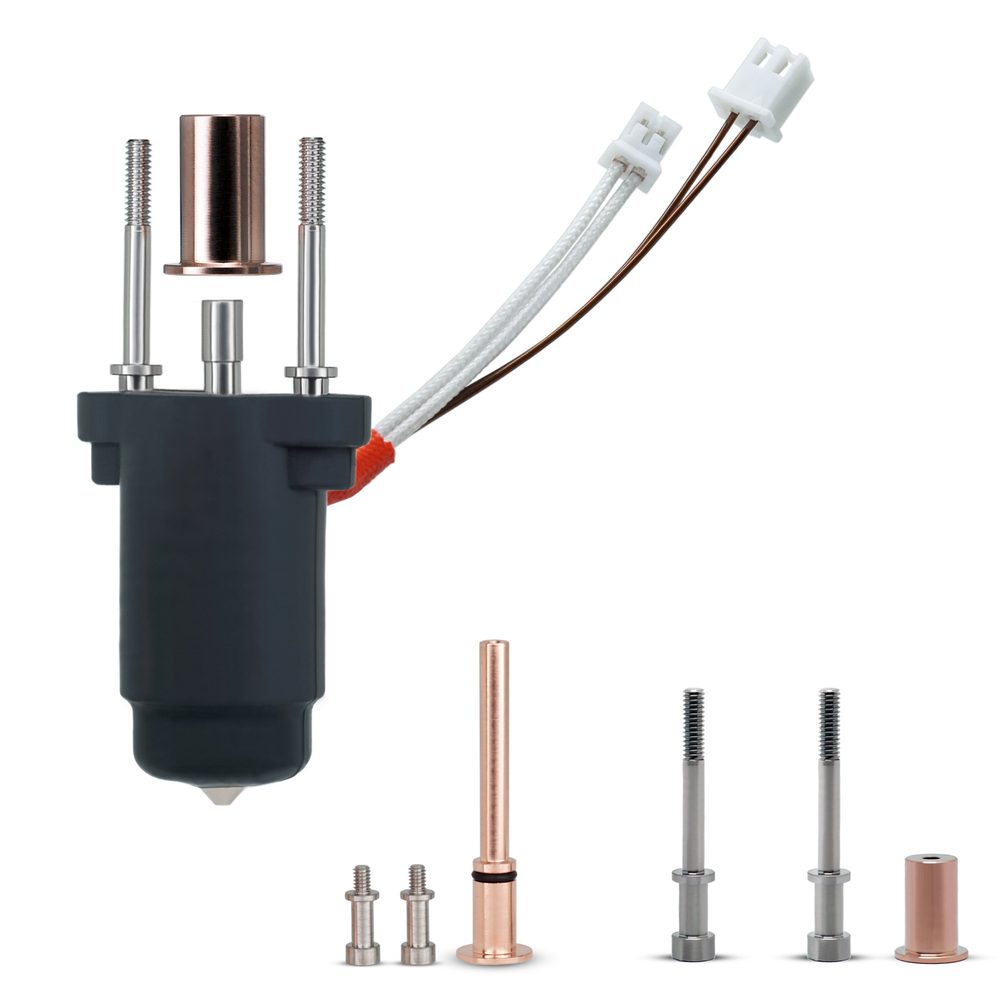
Micro Swiss · $60–90
A modern all-metal hotend featuring a sealed nozzle-and-heat-break assembly for a leak-proof design. Partners with Bondtech CHT technology for up to 50 mm³/s flow. Available for Bambu Lab, Creality K1/K2, and Elegoo printers. Tool-free nozzle changes without preheating.
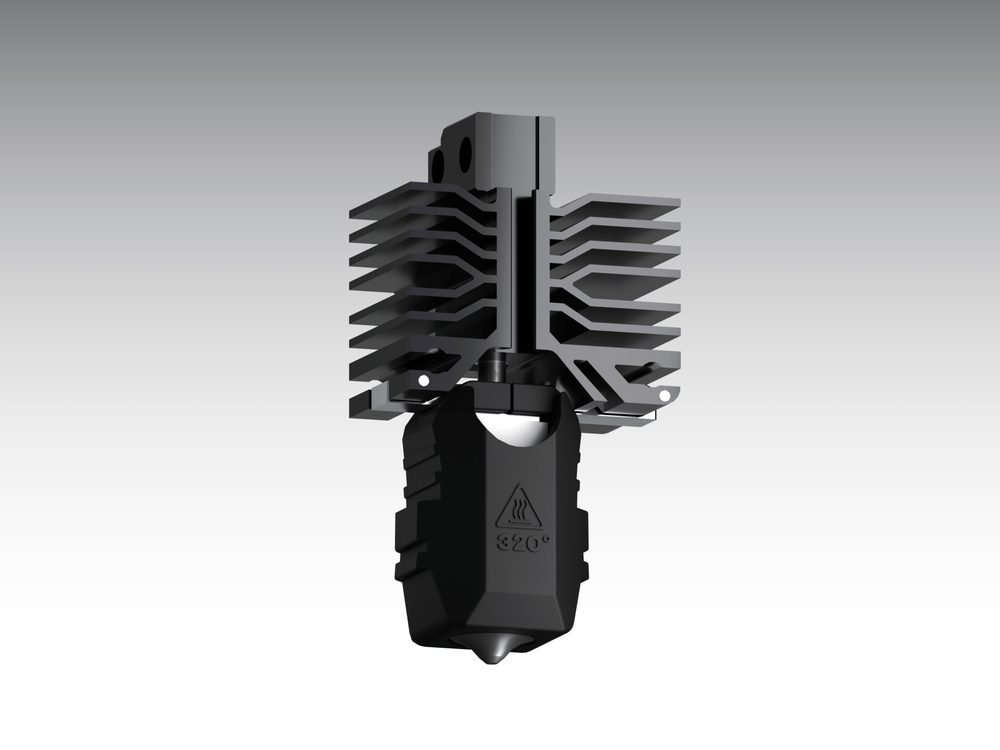
Phaetus · $26–30
Phaetus' affordable drop-in hotend replacement for Bambu Lab (X1/P1) and Qidi printers. The Conch offers improved thermal performance over stock at a budget-friendly price point. A great first upgrade for Bambu/Qidi owners.
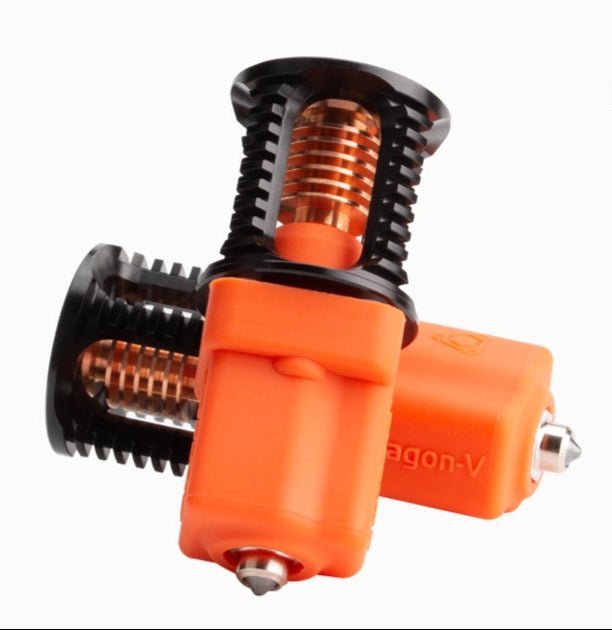
Phaetus · $55–80
The latest evolution of the Dragon line with an improved heat break design for better thermal performance. Same compact Dragon form factor and 500°C capability. A popular upgrade path for existing Dragon users wanting improved print quality and reliability.
Phaetus · $55–75
Discontinued: Phaetus has removed the HF from its store (the Dragon ST and UHF remain). It was the High Flow variant of the Dragon with a wider bore heat break for increased melt capacity. Same compact form factor and 500°C capability. Ideal for speed printing while maintaining the Dragon's reliability.
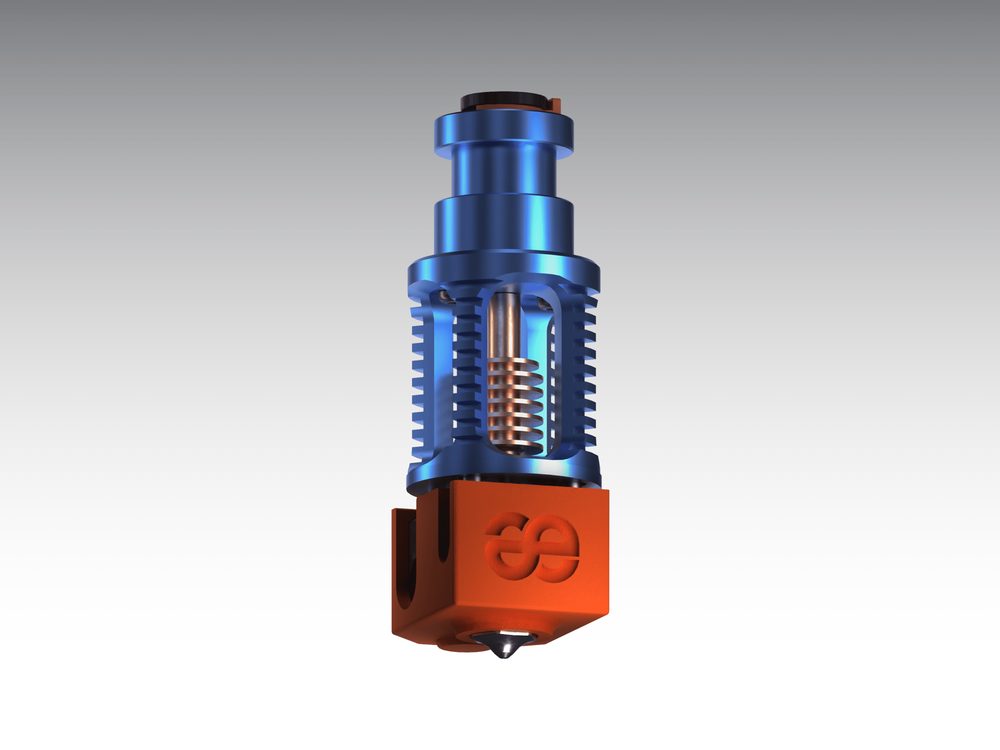
Phaetus · $50–70
A compact, high-quality all-metal hotend with an ultra-thin 0.1mm walled titanium heat break for exceptional thermal performance. V6 nozzle compatible. Widely used in Voron builds as a reliable, no-fuss option. Available in Standard Flow and High Flow variants.
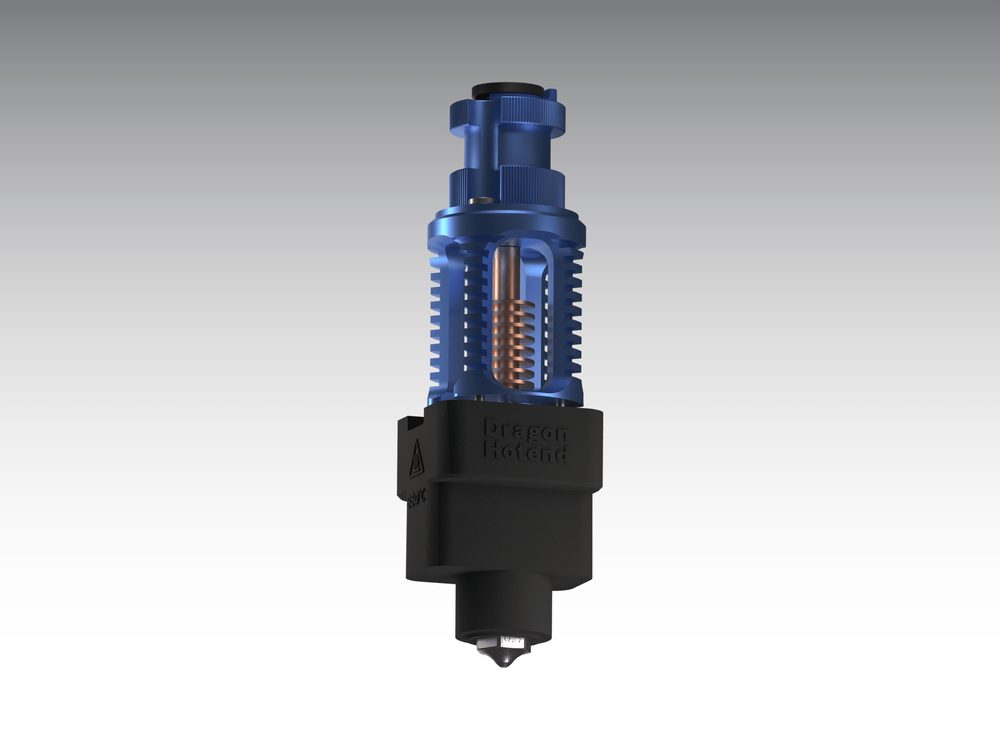
Phaetus · $65–85
Ultra High Flow Dragon with a lengthened plated copper heat block and extension nut for a dramatically expanded melt zone. Achieves Volcano-class flow rates in a more compact package.
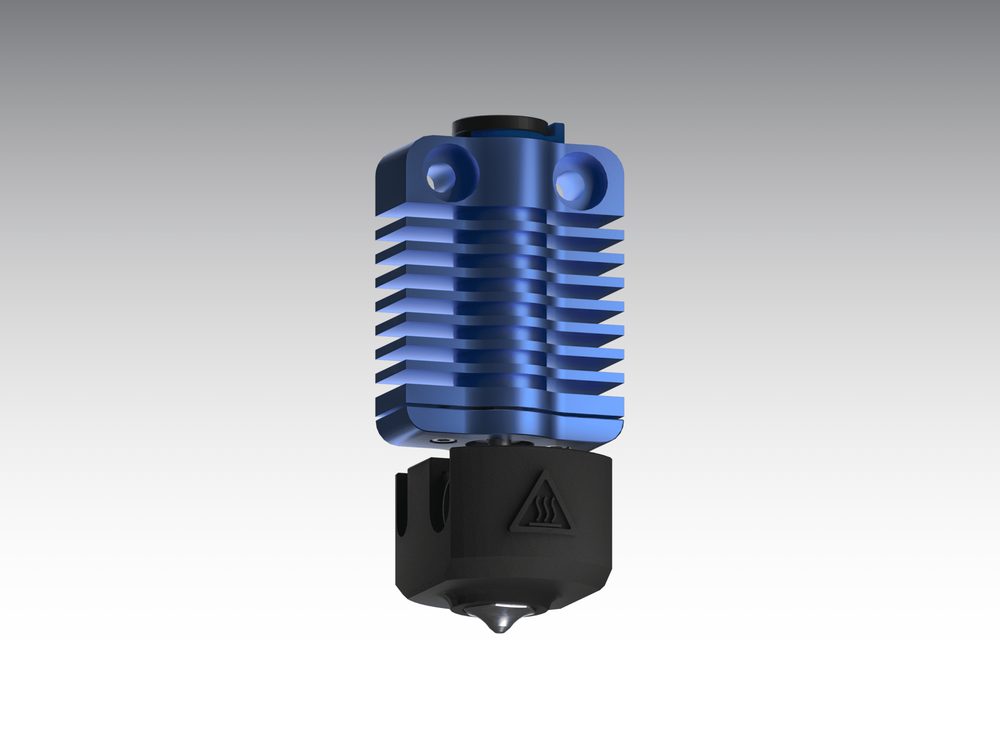
Phaetus · $30–45
A budget-friendly all-metal hotend from Phaetus with copper alloy heat sink for good heat dissipation. Available in BMO (Creality-compatible) and BMS (V6-compatible) variants. A solid entry point into all-metal hotends.
Phaetus · $100–115
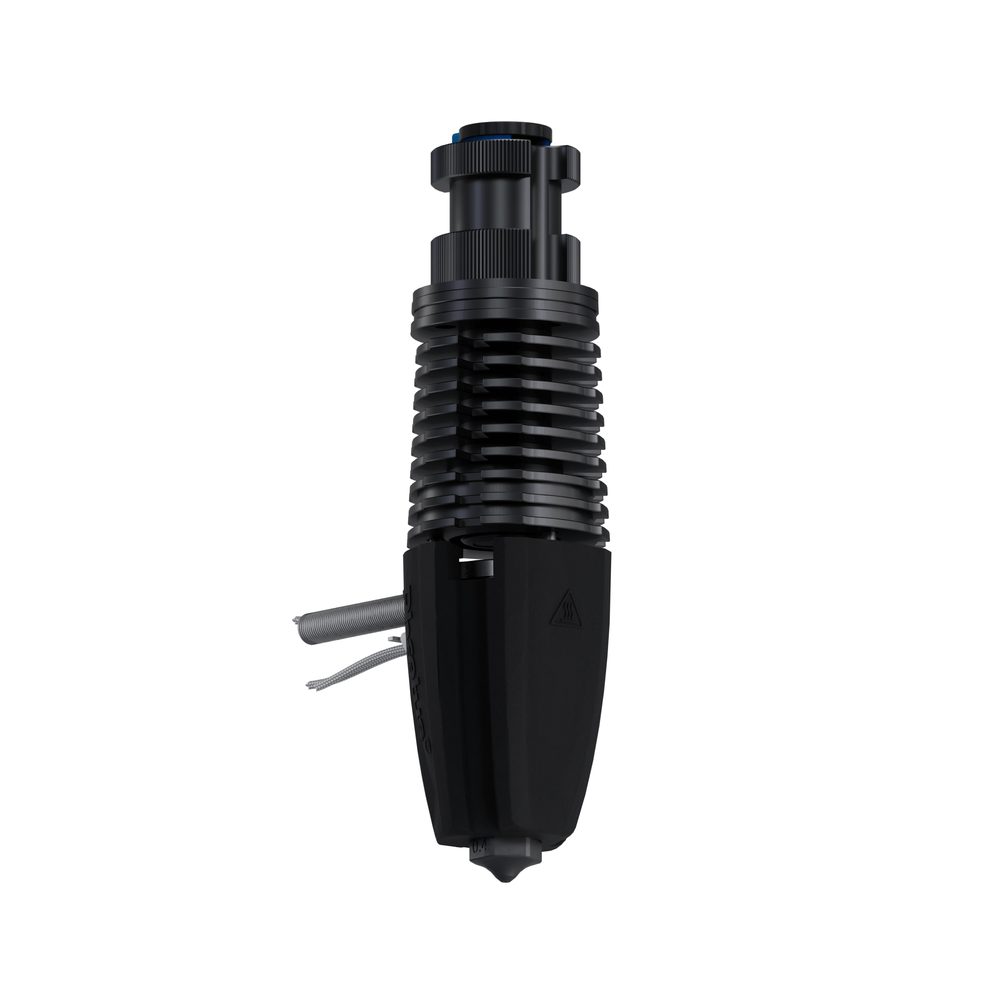
The abrasive-filament specialist of the Rapido 2 family. Features an RCC (Refractory Carbide Coating) coated all-metal heat break for extreme wear resistance when printing carbon fiber, glass fiber, and other abrasive composites. PT1000 thermistor for 350°C capability. Same 115W ceramic heater and fast heat-up as the standard Rapido 2.
Phaetus · $80–100
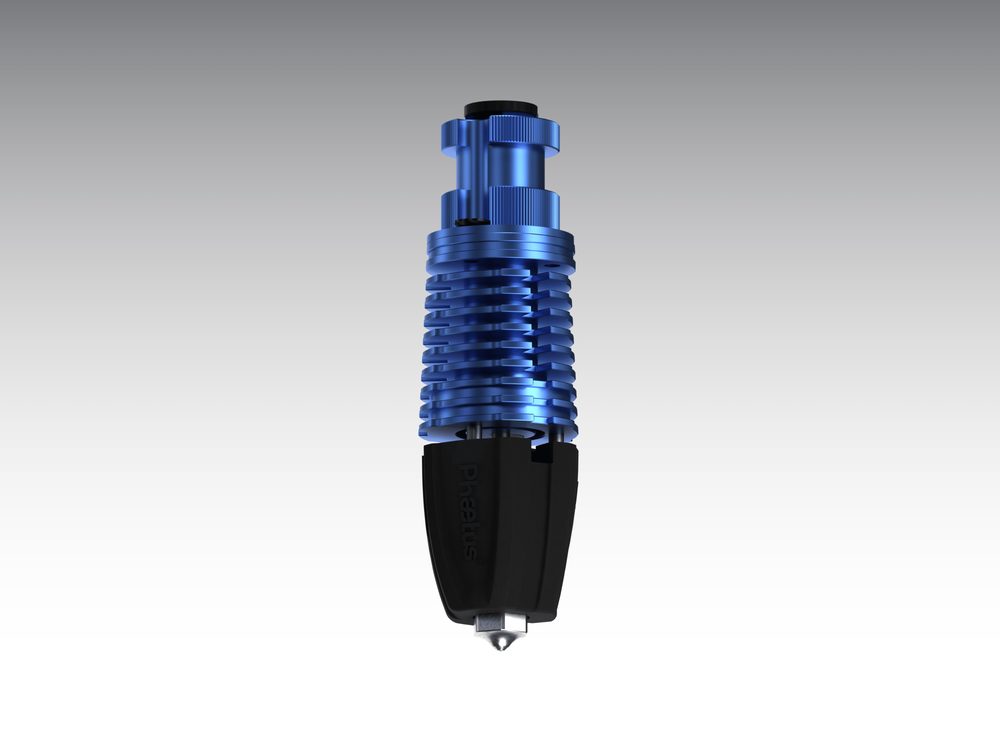
An extremely fast-heating hotend with a cylindrical ceramic heating element. Reaches 200°C in 35 seconds. The Rapido 2 features a titanium heat break (upgraded from stainless steel in v1), removable thermistor, and the ability to quick-swap between HF and UHF configurations.
Phaetus · $90–110
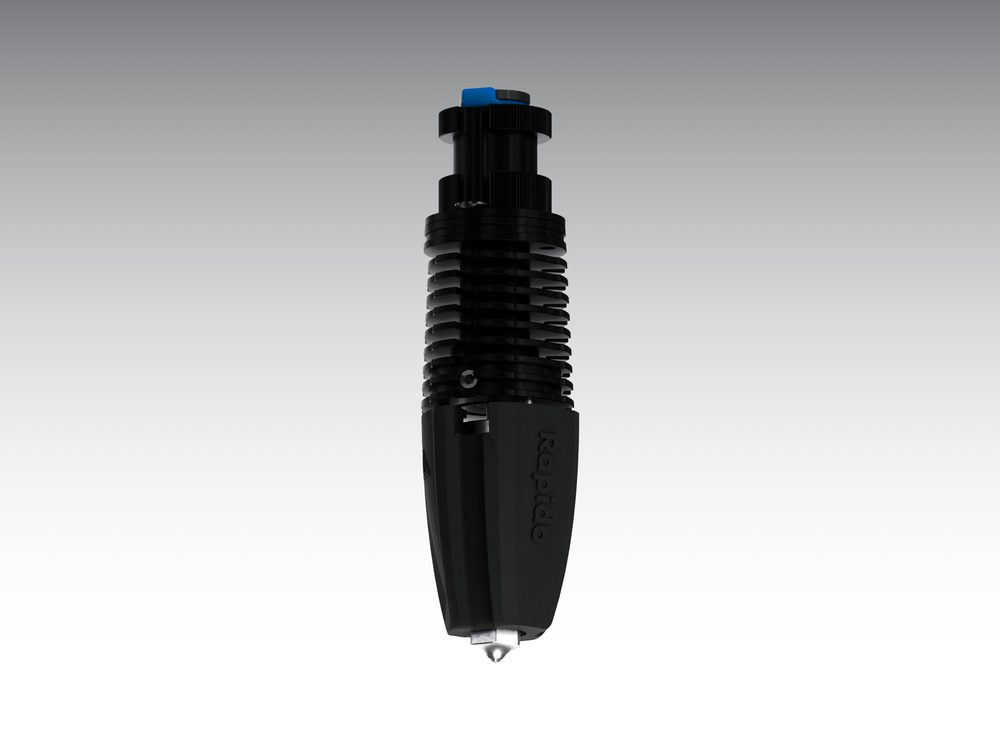
The Ultra High Flow configuration of the Rapido 2. Comes with both V6 and Volcano nozzles plus the adapter hardware. With the extended melt zone and Volcano nozzle, achieves an incredible 75 mm³/s flow rate.
Phaetus · $89.99
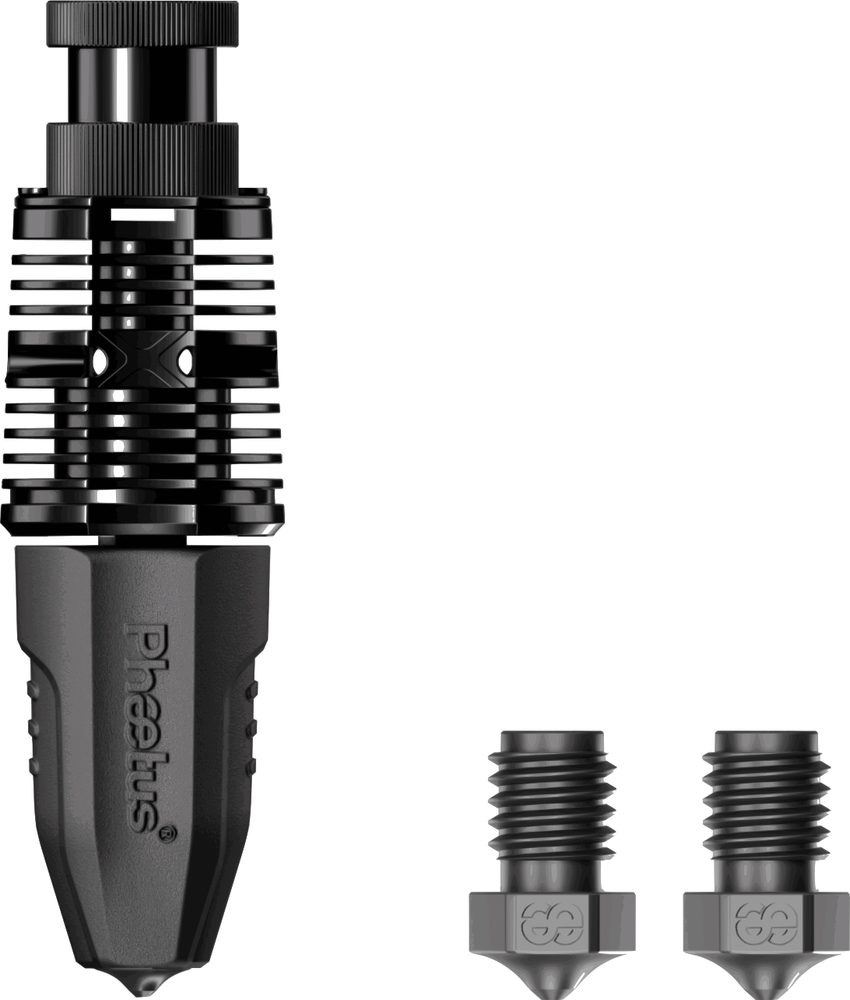
Phaetus's 2026 'Super Flow' hotend built around the new Liber™ Flow System, which shortens the distance between heat source and filament core for faster, more even heat transfer — pushing flow past 100 mm³/s. Aluminum heatsink, titanium alloy heatbreak with a physical thermal barrier against heat creep, copper alloy heat block, and an EndCoat-treated nozzle. Uses standard V6 nozzles and drops onto Rapido/NextG-compatible mounts; also fits E3D V6-style, Prusa, and bowden setups.
Procyon · $225
A modern open-source high-flow hotend featuring an inverted heat break design that keeps threads out of the melt zone for improved thermals. Uses only M3 and M4 fasteners (no tiny screws). Dual cooling options: air-cooled or conduction-cooled via metal plate. Two melt zone lengths available (long ~53.5mm, short ~41mm). Holds heatsink at 118°C passively with block at 260°C.
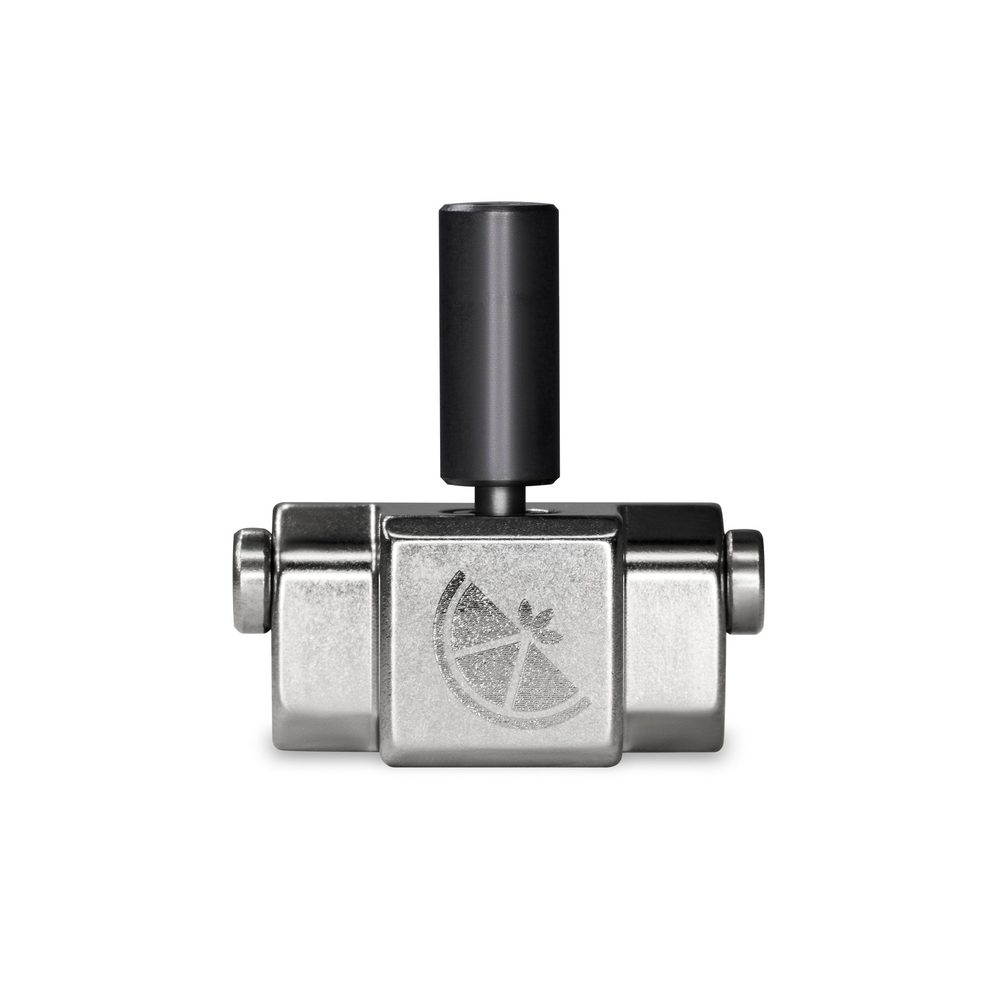
Slice Engineering · $80–100
Slice Engineering's premium V6-compatible hotend featuring their bi-metallic heat break technology. Copper alloy and strain-hardened steel construction conducts 85% less heat than standard threaded heat breaks. A refined V6 replacement for those wanting better thermal performance without changing ecosystems.
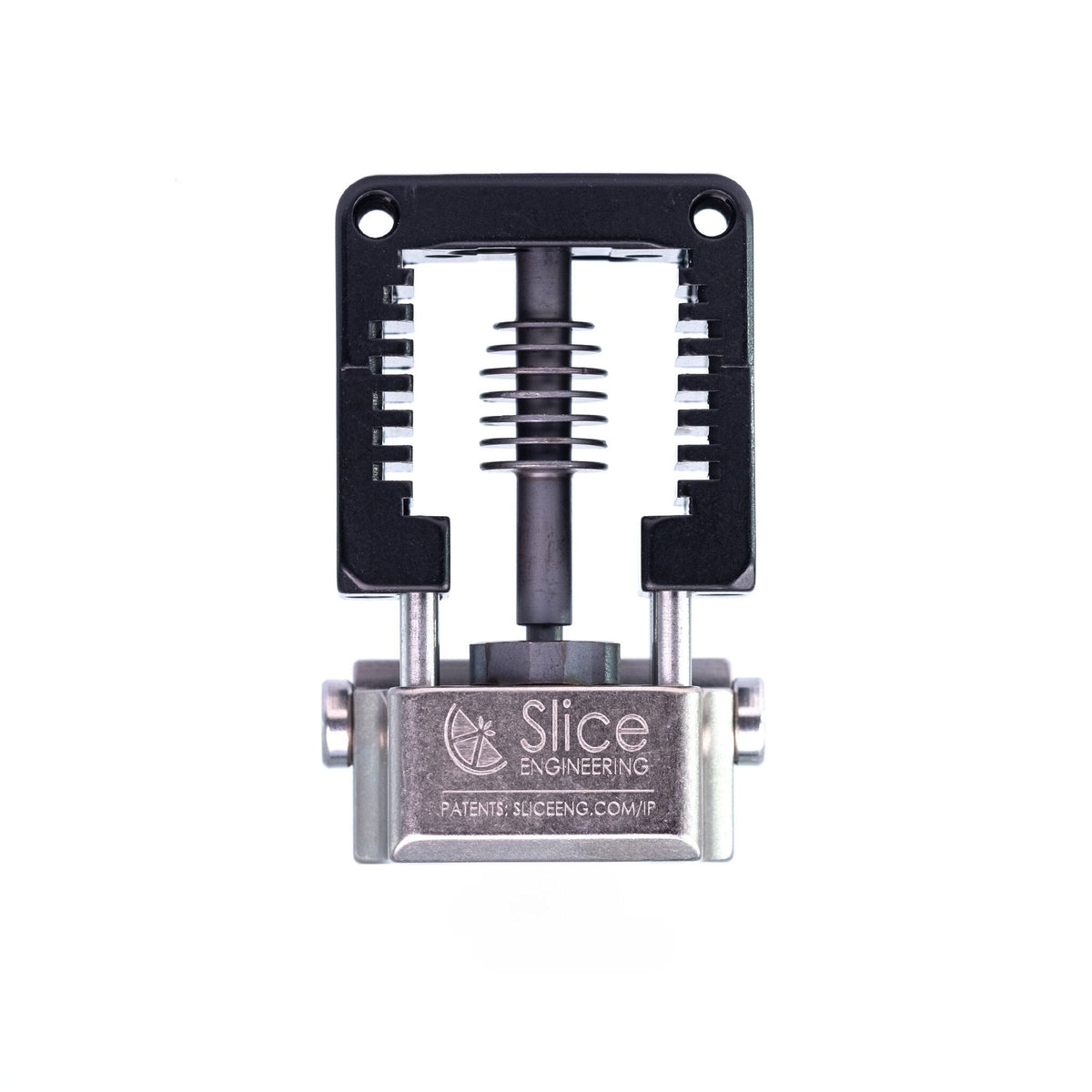
Slice Engineering · $150–175
A premium American-made hotend with a patented 'roll cage' design that protects the heat break and enables one-handed nozzle changes. Bimetallic heat break conducts 85% less heat than standard threaded breaks. Aircraft-grade aluminum heat sink.
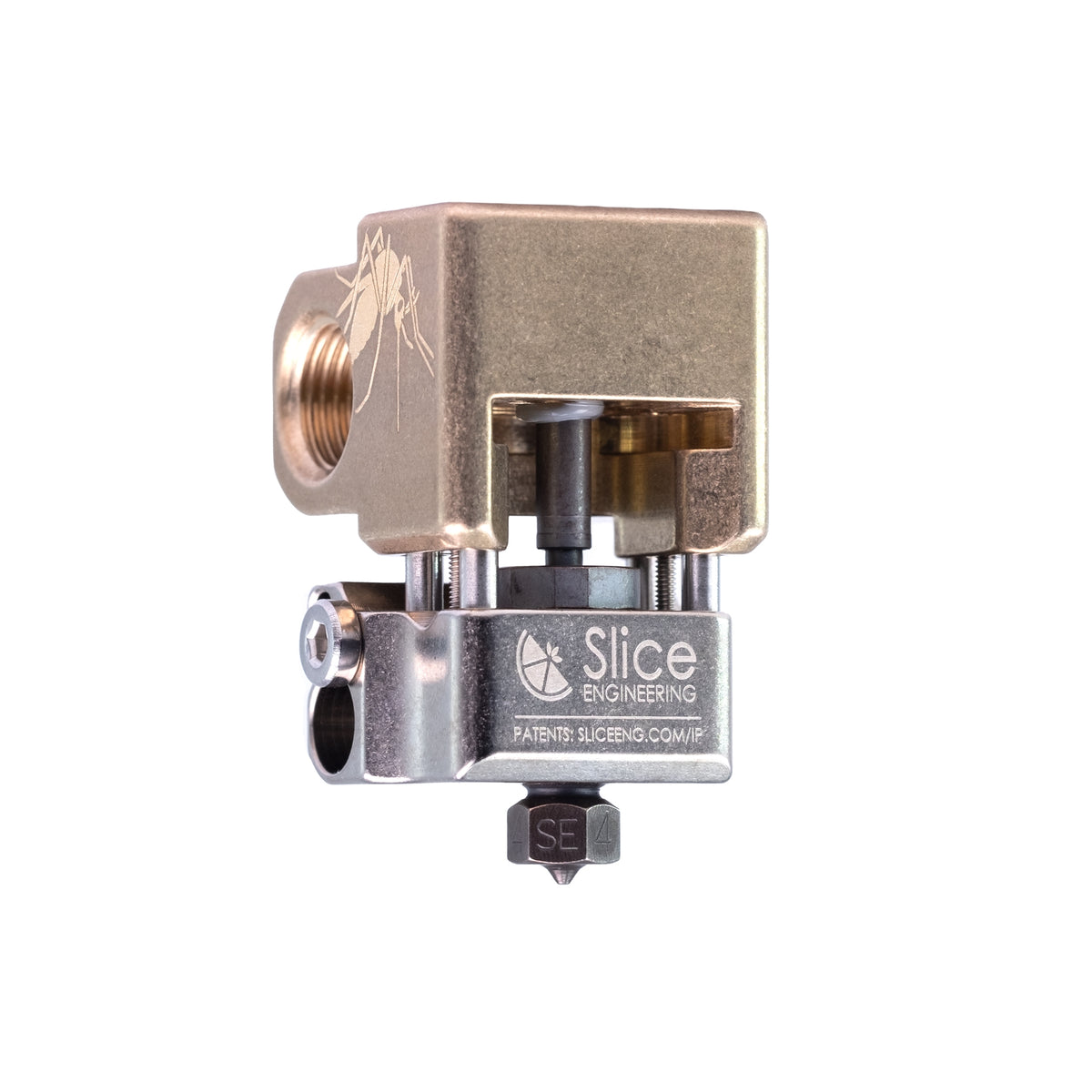
Slice Engineering · $175–200
A liquid-cooled variant of the Mosquito designed for high-temperature enclosures exceeding 80°C. Features a corrosion-resistant bronze alloy heat sink compatible with various coolants. Essential for printing PEEK, PEI, and other high-performance polymers in heated chambers.
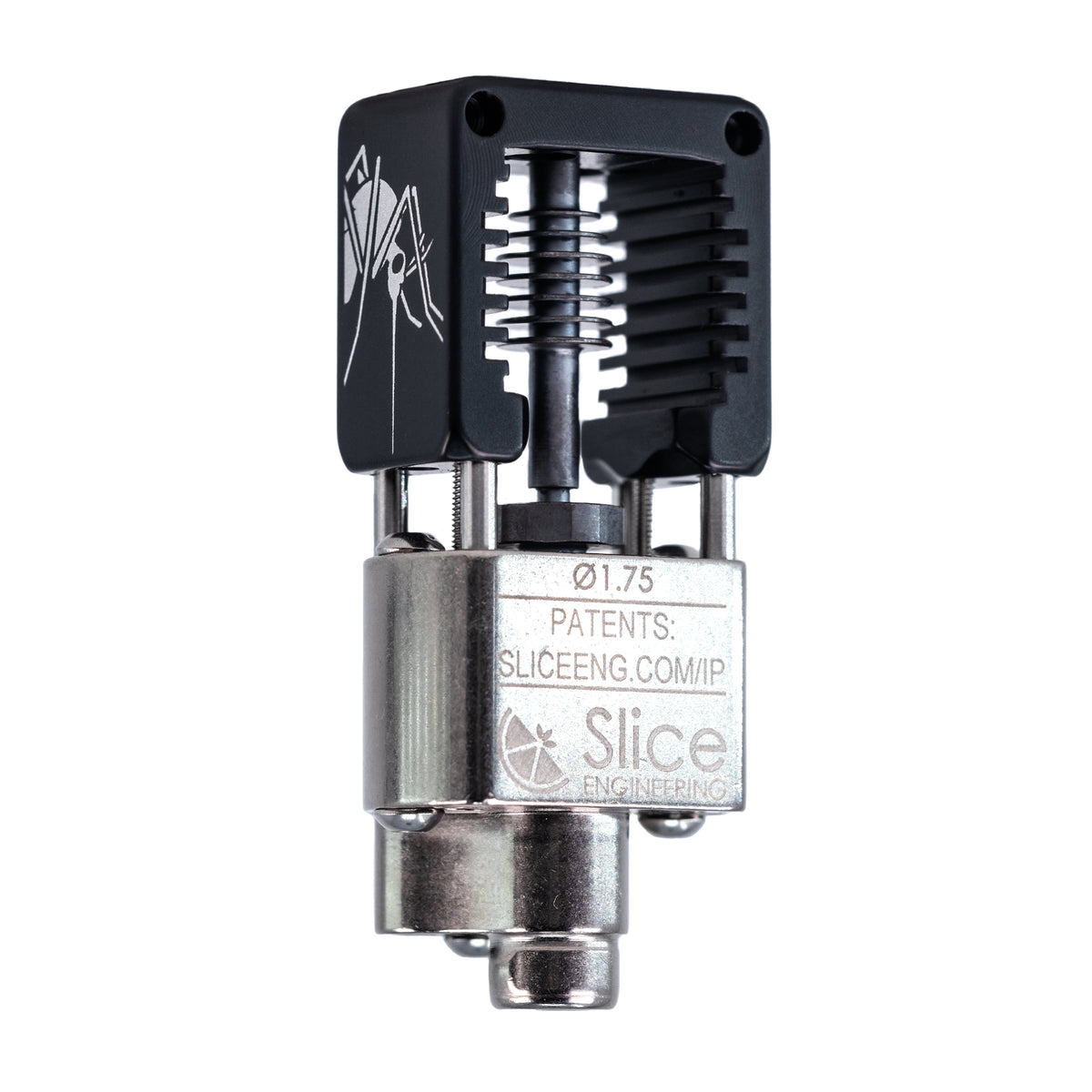
Slice Engineering · $200–250
The high-flow version of the Mosquito with a significantly larger hot block and extended melt zone. Supports dual heater sockets for up to 100W heating power. Available in air, liquid, and conduction-cooled configurations.
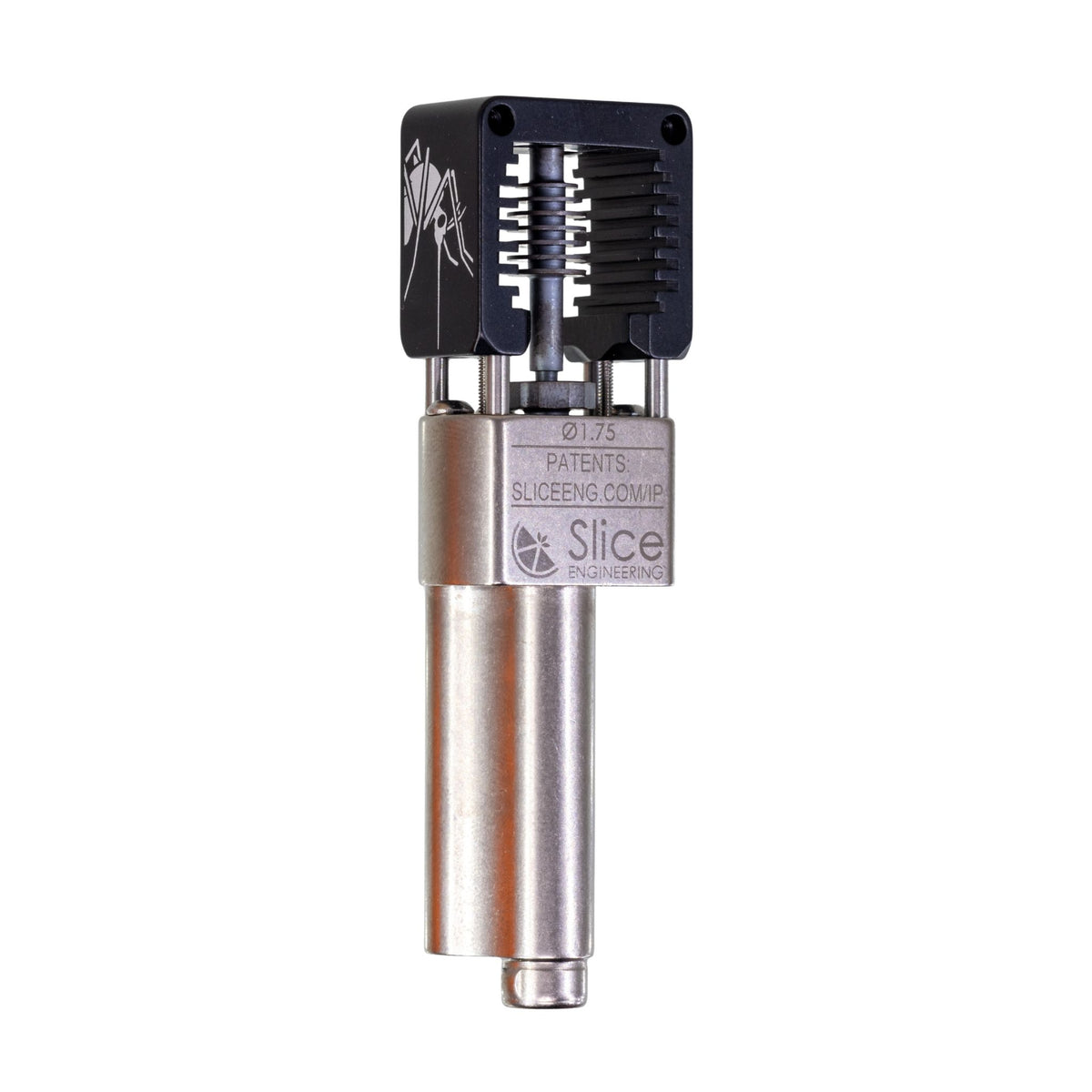
Slice Engineering · $350–400+
The world's highest volumetric flow rate hotend. Features a 61mm melt zone with direct filament-to-hot-block contact, 200W dual heater configuration, and an internal flow-splitting die that divides molten plastic into three streams for consistent, ultra-fast extrusion.
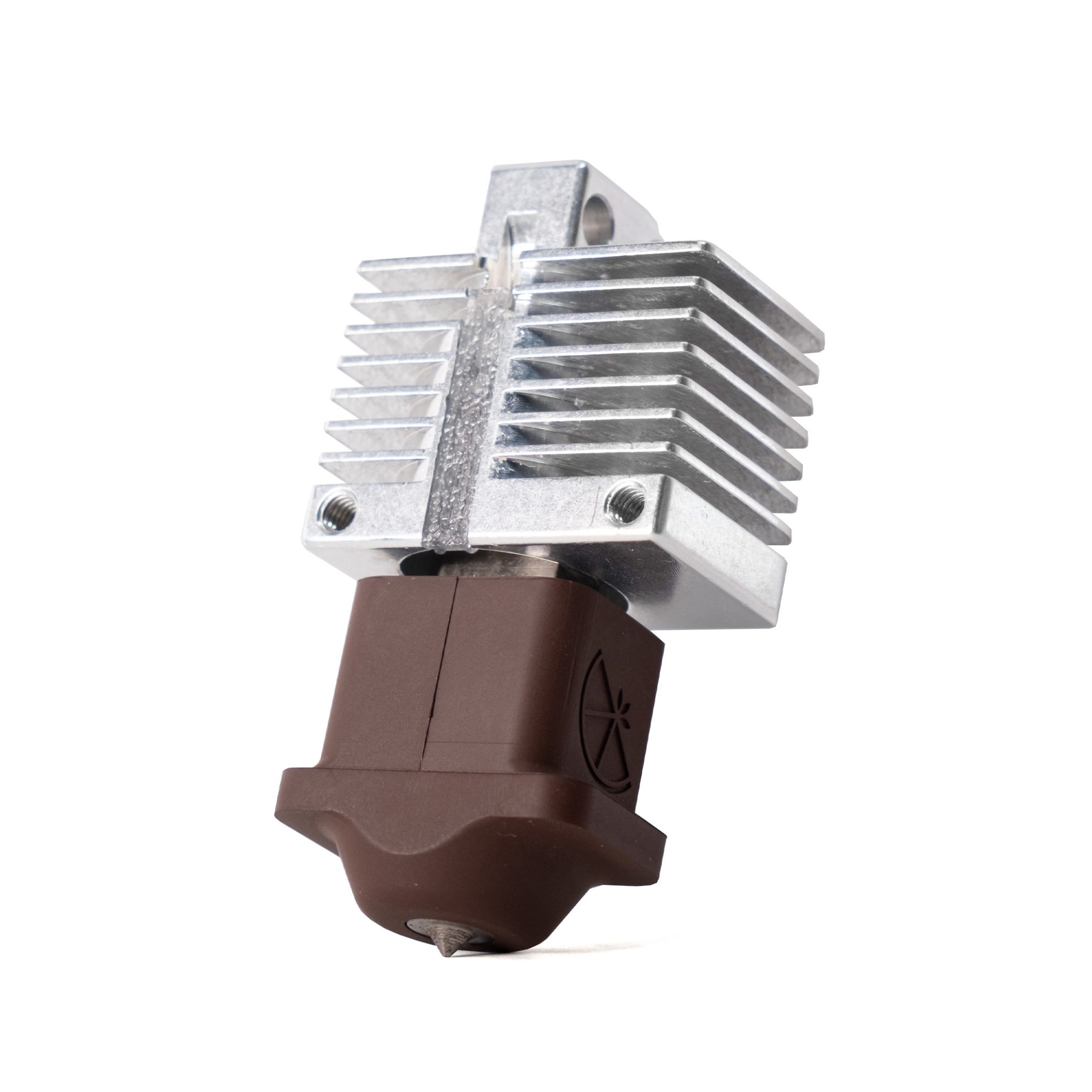
Slice Engineering / Bondtech · $90–120
A Slice Engineering × Bondtech collaboration hotend for Bambu Lab printers. Features a bimetallic heat break, copper hot block, and the new open-source FIN nozzle standard with 6mm hex for easy changes. Compatible with Bondtech CHT FIN and Slice GammaMaster FIN nozzles.
TriangleLab · $25–40
TriangleLab's affordable version of the Dragon hotend. Available in SF and HF variants. A popular budget option for Voron builds, though quality can be inconsistent compared to genuine Phaetus units.
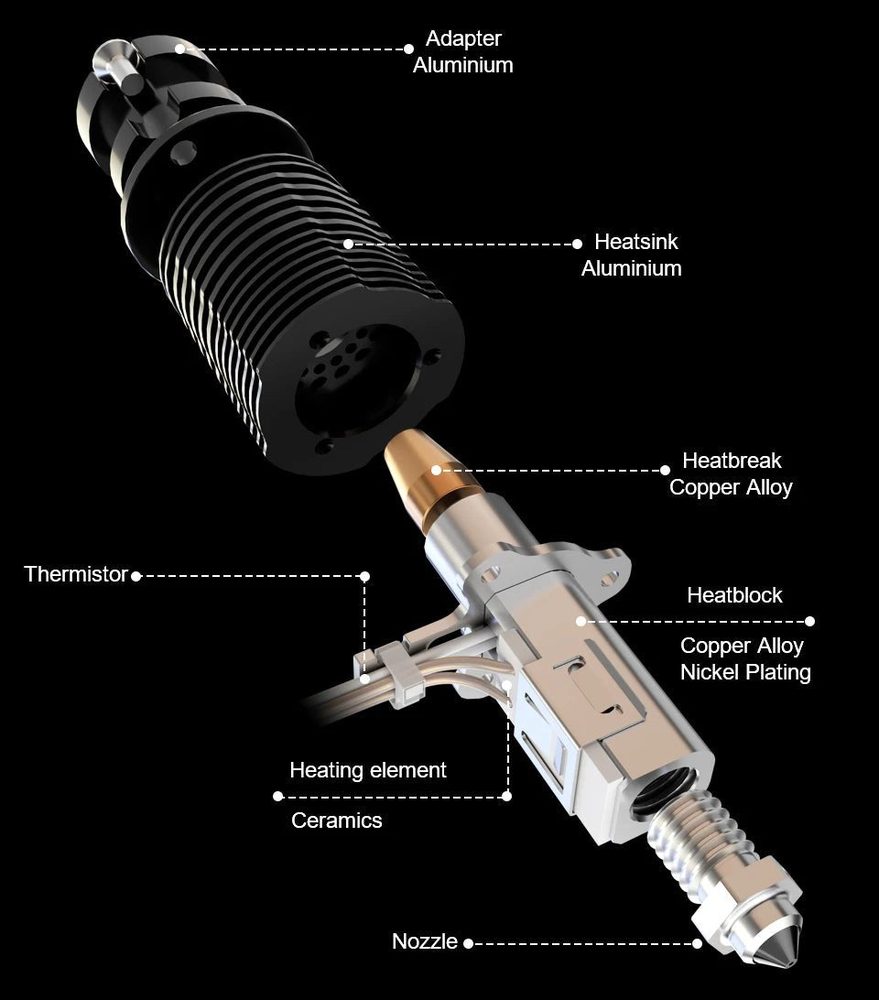
TriangleLab · $80–90
TriangleLab's take on the Rapido design with upgraded ACE (Advanced Ceramic Element) heating. Offers the same HF/UHF switching capability as the Phaetus Rapido 2 with a PT1000 option for 350°C printing. Competitive pricing from a well-known Chinese manufacturer.
TriangleLab · $30–50
TriangleLab's ceramic heating core hotend with bi-metal heat break. Available with standard V6 nozzle or TUN (TriangleLab Unity Nozzle) — a one-piece nozzle-and-heatbreak design that eliminates leaks. 360° ceramic ring heating for very fast, even heat-up.
TriangleLab · $45–65
Liquid-cooled version of the TD6S hotend for use in heated enclosures. Uses water circulation for heat dissipation, keeping the heatsink at room temperature continuously. Compatible with TUN nozzle and Matrix heat break. Ideal for high-temp chamber printing.
TriangleLab · $35–55
TriangleLab's Rapido-form-factor hotend with ceramic ring heating. Uses the same 16mm bolt circle as Dragon/Rapido, making it a budget-friendly drop-in alternative. Available with bi-metal heat break or TUN one-piece nozzle.
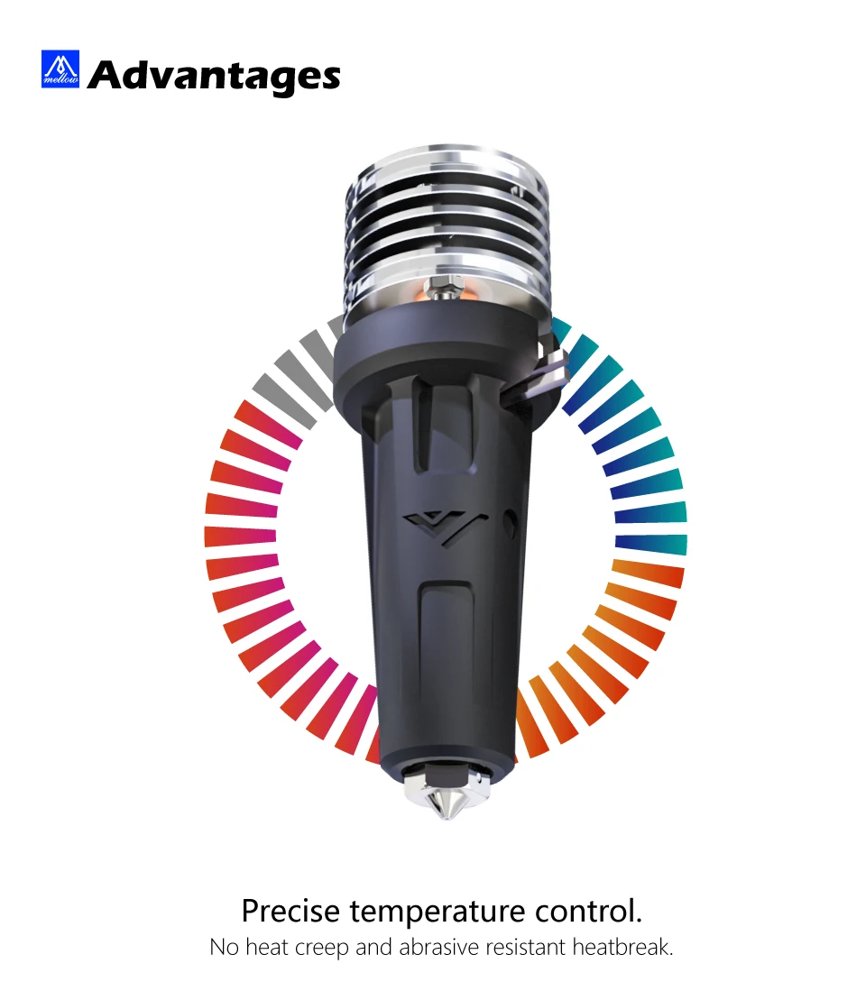
VzBot / Mellow · $250–400+
A massive high-flow hotend designed for industrial-scale and large-format 3D printing. Features an extremely long melt zone for maximum volumetric flow. Typically used on large delta or gantry printers where weight is less of a concern and raw throughput is the priority.